Gradiant strengthens its leadership in quantum technologies through its participation in three strategic European Space Agency partnerships
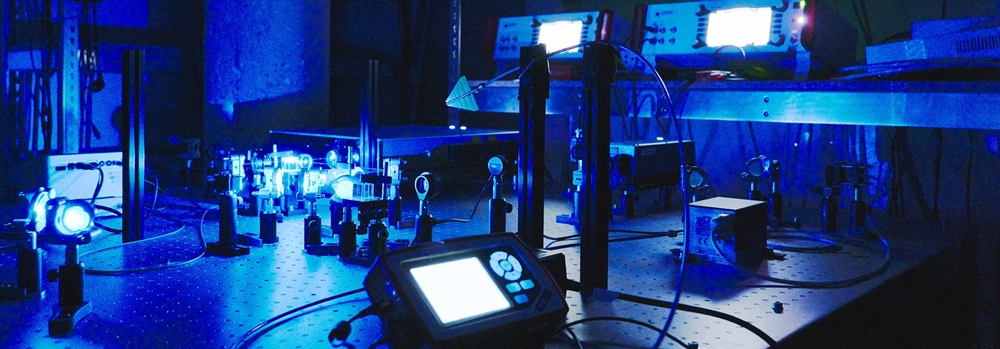
The technology centre is part of consortia led by Airbus and Safran to develop future satellite-based quantum communications and advanced Earth observation systems
Secure quantum communications, advanced sensors and new observation capabilities will shape the next generation of European space systems
Gradiant – a technology centre specialising in deep tech technologies that transforms knowledge into innovative solutions with real impact on industry and society, continues to strengthen its position as one of Spain’s leading organisations in quantum technologies through its participation in three strategic projects promoted by the European Space Agency (ESA). Its involvement in these international consortia, which include some of the most prominent companies in the European aerospace sector, such as Airbus Defence and Space Spain and Safran Electronics & Defense, reinforces its role in applied aerospace innovation and its position as a key technology partner in the development of future European space infrastructures.
The three initiatives address some of the main technological challenges facing the space sector, from the development of secure quantum communication networks between satellites to the creation of next-generation quantum sensors designed to enhance Earth observation capabilities. These technologies are expected to play a key role in strategic areas such as communications, navigation, Earth monitoring and security.
“Our participation in these projects represents significant recognition of Gradiant’s capabilities in quantum technologies and reflects the trust that the European Space Agency and leading industrial players place in our expertise. Being part of these consortia allows us to contribute to the development of Europe’s future space infrastructures and strengthen our position as a leading player in quantum technologies applied to space. It also highlights the enormous potential of these technologies to transform the future of communications, Earth observation and security”, says Luis Pérez-Freire, Executive Director of Gradiant.
Building the next generation of space infrastructures
One of these projects is QUPIDO (QUantum and Pnt Intersatellite Communications with Data AggregatiOn), led by Safran Electronics & Defense. Its aim is to develop inter-satellite communication links that combine quantum security with advanced synchronisation and relative positioning mechanisms. QUPIDO includes the development of ground-based demonstrators that will lay the foundations for future inter-satellite communication networks.
Gradiant is also participating in QUEENS (Quantum Entanglement by Enhanced Timing in Satellites), another initiative led by Safran Electronics & Defense, together with Airbus and Airbus Crisa. The project aims to develop demonstrators to validate future satellite-based quantum communication networks through the distribution of quantum entanglement between different space nodes, combining ultra-precise synchronisation with intrinsically secure communications.
The third project, “Rydberg Based Microwave Radiometer”, led by Airbus Defence and Space Spain, based in Getafe, will draw on Gradiant’s expertise in radio-frequency quantum sensors based on Rydberg atoms. These capabilities will support the development of a new generation of radiometry systems for Earth observation, leveraging the tunability and sensitivity potential of these quantum platforms. The consortium also brings together Durham University’s expertise in atomic systems and Airbus’s capabilities in radiometry and the space qualification of optical systems at its facilities in Spain and Germany, respectively.
A strategic commitment to quantum technologies
Gradiant’s participation in these European Space Agency projects forms part of its strategic commitment to quantum technologies, one of the areas expected to shape the evolution of key sectors in the coming years. The centre develops quantum technology-based solutions with the aim of translating their potential into real-world applications and strengthening the competitiveness of industry.
This commitment to innovation is reflected in Gradiant’s ability to drive R&D&I projects in this field. In 2025, Gradiant mobilised €3.5 million in R&D&I projects focused on the development of quantum technologies, consolidating its position as a technology partner for companies and institutions seeking to advance their adoption. Gradiant is also a member of the Cervera Quixote Network of Excellence, whose aim is to promote the development of quantum technologies applied to defence and security, helping to strengthen the technological sovereignty and strategic autonomy of Spain and Europe.
This project has been developed within the framework of a European Space Agency (ESA) programme.
The views expressed in this publication can in no way be taken to reflect the official opinion of the European Space Agency (ESA).

Red de Excelencia Cervera en Tecnologías Cuánticas para Defensa y Seguridad. Financiado por el CDTI – Ministerio de Ciencia, Innovación y Universidades.