Interview with Miguel Ferreira Cao, Head of Quantum Technologies
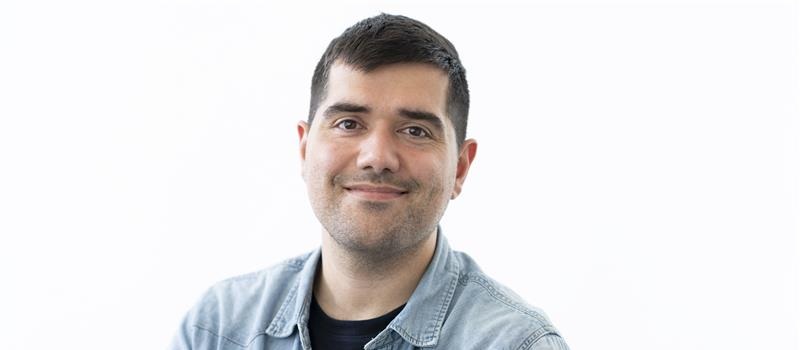
In the global race to lead the quantum revolution, Spain has taken a decisive step with the creation of the QUORUM consortium, an initiative that brings together scientific, technological and industrial institutions with the aim of promoting the development and application of quantum technologies in Spain. Ultra-secure communications, highly precise sensors and atomic clocks are some of the innovations enabled by this new technological revolution.
To better understand the scope of these innovations and the role played by QUORUM in driving them forward, we spoke with Miguel Ferreira Cao, Head of Quantum Technologies at Gradiant, within the Advanced Communications – Quantum Technologies department (HoQTech). Miguel specialises in quantum sensing and quantum communications, two key pillars of Gradiant’s Quantum Technologies area.
Curiosities
How did you discover your vocation for quantum physics?
En general, la física es una disciplina que siempre me ha interesado desde casi la niñez, sin saber siquiera que se trataba de “física” . Desde que tengo recuerdos, me han llamado la atención aspectos anecdóticos como: por qué debajo de la ranura de la puerta se ve tanta luz, por qué aparece el arco iris o cómo funciona el movimiento de los objetos. A día de hoy, puedo relacionarlos con óptica, dinámica, etc., pero lo bonito es que son curiosidades propias de muchos niños y que, muchas veces, esa inquietud científica infantil pasa inadvertida. Yo diría que no hay un “breakthrough” vocacional per se, sino que, a veces inconscientemente, otras porque los resultados positivos del estudio te llevan a profundizar más y, en ocasiones, por elecciones fundamentadas, como fue la mía.
¿Qué libro, película o experiencia te marcó especialmente en tu carrera científica?
In general, physics is a discipline that has always interested me, almost since childhood, even before I knew it was called “physics”. For as long as I can remember, I have been fascinated by everyday curiosities such as why so much light can be seen under a door, why rainbows appear, or how the movement of objects works. Today, I can relate these things to optics, dynamics and so on, but what is beautiful is that they are the kinds of curiosities many children have and that, very often, this childhood scientific curiosity goes unnoticed.
I would say there was no vocational “breakthrough” as such. Sometimes it happened unconsciously, sometimes because positive results in my studies encouraged me to go deeper, and sometimes because of well-founded choices, as was the case for me.
What book, film or experience had a particular impact on your scientific career?
I do not have a specific book or film in mind as something that triggered a vocational change or determined my scientific career. If anything, I would first mention the many documentaries I watched with my father during my childhood, ranging from nature documentaries to astrophysics.
Later, certain stages of my university experience partly shaped my scientific mindset and decision-making. For example, the discontinuation of the Physics degree at the University of Vigo, or the withdrawal of competitive funding for research in experimental quantum physics in well-established groups that were at the state of the art at the time, were an important reality check. It meant seeing that Spain’s commitment in the 2000s and 2010s was very limited, and that a modern, technological university such as UVigo was giving up an area of knowledge generation and technological foundation that we now see as essential.
If you had not gone into technology, what would you have liked to be?
The truth is that I do not know, because I have always considered several options depending on the context. On the one hand, I was also very interested in fields as different as history and chemistry. On the other, I had a relatively deep musical education and spent many years involved in music, both individually and in different groups, from childhood onwards, even combining the Advanced Degree in Music with my degree in Physics for a time.
In general, if I had not pursued a career in R&D, I might have become a teacher. Teaching any of these disciplines to teenagers would have been very stimulating.
Difference between quantum communication networks and today’s classical networks
Quantum networks differ significantly from classical networks, both in terms of the technological operation used to transmit information and, especially, in terms of their security implications.
Both transmit data through electromagnetic waves, at optical or radio frequencies. In the quantum case, these are taken to a few-photon regime, which makes it possible to move from bits, 0s and 1s, to qubits, with multiple probabilistic combinations of 0s and 1s in different proportions. Quantum networks are expensive, as they require completely new hardware, which means their use is usually reserved for strategic scenarios such as defence, space, critical facilities and the interconnection of quantum computers.
Classical networks, on the other hand, have advantages in terms of transmission speed and are more robust against losses. This creates the need to develop new quantum devices, such as repeaters and memories, capable of preserving qubit information and retransmitting it with robust synchronisation. Classical networks also allow user authentication, while quantum networks still need to evolve in order to achieve this.
At present, both types of networks are beginning to coexist, despite the experimental status of quantum networks, as they offer complementary uses.
Quantum sensors
Quantum sensors are based on the precise manipulation and control of qubits in physical platforms with quantum properties. A qubit can represent the energy level of an electron in an atom or material controlled with precision. Under electromagnetic radiation, electrons absorb or emit energy at very specific frequencies, and these processes can be altered by external effects such as electromagnetic fields, temperature or forces.
Today, quantum sensing can be described as the family of quantum technologies closest to the market, with several successful use cases already demonstrated in sectors such as biotechnology, clinical diagnosis, navigation and positioning, anomaly and threat detection, and Earth observation.
This distinguishes it from quantum computing, which requires cryogenics to keep qubits stable, whereas sensors can operate under normal conditions. This facilitates their integration into real applications and reduces the instrumentation required.
Quantum sensing has therefore benefited from advances in quantum hardware thanks to compatibility in platforms and control systems. While quantum computing requires each qubit to be controlled individually, sensing improves by controlling many qubits simultaneously, which reduces complexity and has enabled the broader deployment of quantum sensors today.
Security and quantum technologies
In recent years, fairly specific areas of application have been defined for quantum communications in strategic sectors. We are currently in a geopolitical moment in which there is great concern about security in all its dimensions. This is where Quantum Key Distribution, or QKD, comes into play, thanks to its intrinsic robustness against external attacks, which prevents information from being cloned or spied on undetectably.
Applications are being promoted in military environments, such as key distribution between command centres, or across ground-to-satellite and satellite-to-ground links. We are even beginning to see security applications in drones using coupled fibre-optic links. In the future, quantum networks will be ideal for securing inter-satellite communications or even for simultaneous key sharing between multiple strategic nodes, whether on Earth or in space.
On the other hand, it must be borne in mind that it is neither feasible nor desirable to replace the entire infrastructure of classical communication networks, whose benefits and uses have been consolidated over recent decades, with quantum networks, which are currently much more expensive. For this reason, the security of classical networks is being improved through new methodologies such as crypto-agility or, more specifically, Post-Quantum Cryptography, or PQC, in order to make key distribution algorithms more dynamic, more resistant to attacks and, in turn, capable of addressing the challenges posed by quantum computing in breaking previously established cryptographic algorithms.
Technical challenges
At present, the enabling technology that supports quantum communication networks is still evolving, or even still under development. Every five years, new possibilities will be unlocked thanks to technological progress.
Today, we have advanced to the point of having robust lasers capable of generating photons reliably, as well as robust photon detection, counting and tagging systems. However, these technologies are constantly evolving and present requirements for compact integration into photonic chips, which are being addressed in parallel by multiple groups around the world.
The integration of lasers, signal modulators or even entangled photon generators into photonic chips will open the door to the deployment of quantum communications in contexts where, today, they are useful but not very operational due to the lack of space to integrate the necessary devices.
On the other hand, a real quantum internet, based on multi-user quantum networks, presents challenges such as the development of quantum repeaters: devices capable of receiving a qubit, storing it and redistributing it, while protecting it against losses. This technology, currently in an experimental stage, opens the door to reaching much longer distances, while also improving the key transmission rate. With its development and validation, a new generation of quantum network protocols will begin to emerge, which are currently still relatively unexplored, as the technology has so far focused mainly on transmission between two trusted nodes.
Interview originally published in: Interview with Miguel Ferreira – Gradiant – Quorum

QUORUM is a project subsidised by CDTI and funded by the European Union – NextGenerationEU. The members of QUORUM are: Gradiant, CESGA, FIDESOL, Fujitsu, GAIN, ITECAM and QCentroid.
However, the views and opinions expressed are solely those of the author or authors and do not necessarily reflect those of the European Union or the European Commission. Neither the European Union nor the European Commission can be held responsible for them.