Gradiant develops a self-sustaining photonic neuron capable of operating without external power in remote environments
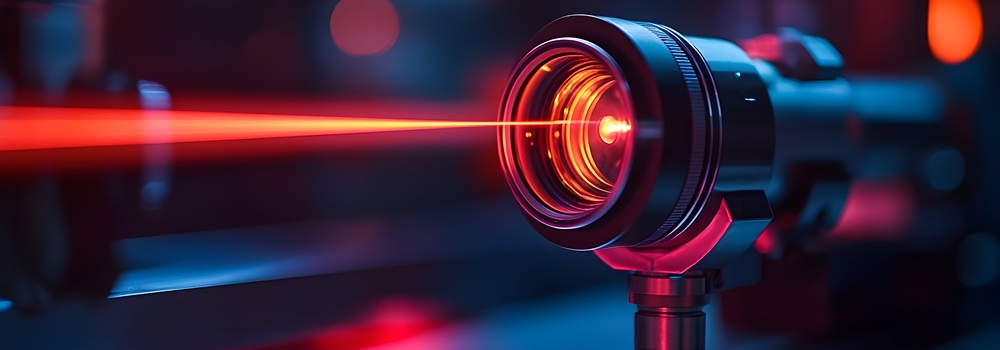
The neuron stands out for being self-sustaining, as it can reuse its own optical losses, and autonomous, since it can operate without external control and independently decide where to direct that energy within a circuit
At a time when the energy demand of AI continues to grow, this development, which is currently undergoing the patenting process, could help significantly reduce the energy consumption of these systems.
Its ability to process and operate locally, without an external connection or power supply, makes it particularly well suited to remote environments or extreme conditions
Gradiant technology centre is developing the first self-sustaining photonic neuron, capable of operating without an external power supply by harvesting and reusing its own optical losses to power its components and manage their behaviour
In addition to its energy self-sufficiency, the neuron, which is currently undergoing the patenting process, also stands out for its autonomous operation: it can function without external control and independently determine how and where to direct energy in order to activate itself. This makes it a key building block for the development of more advanced intelligent architectures.
Marta Castro, Head of Micro-Nanoelectronics and Photonics at Gradiant, explains: “Unlike traditional electronics, which faces greater constraints in terms of energy consumption and heat dissipation, photonics, based on the use of light to transmit information, offers greater efficiency. However, even photonic systems are not free from optical losses. The innovation we are developing lies precisely in the ability to capture those losses and reuse them as an energy source, creating a self-sufficient and self-sustaining system.”
This development represents a paradigm shift in how photonic systems and their efficiency are conceived. “We are not only reducing consumption; we are turning what was previously regarded as a loss into a resource. This opens up new possibilities for designing more sustainable and autonomous systems, particularly in environments where access to energy is limited or non-existent,” Castro adds.
Applications with global impact
This breakthrough represents an important step towards the development of more efficient and sustainable technological systems, particularly in fields such as Artificial Intelligence, where training and operating models require vast amounts of electricity.
At a time when this demand is growing faster than available power supply capacity, the photonic neuron could help significantly reduce energy consumption and support the more sustainable development of AI systems. Its ability to process and operate locally, without an external connection or power supply, also makes it particularly well suited to remote environments or extreme conditions, including isolated infrastructure, devices deployed in hard-to-reach locations and even space applications.
A flagship European project
This breakthrough is being developed within the bLOSSom project (Sustainable Photonic Systems through Autonomous Loss Harvesting), which focuses on developing self-sustaining photonic systems through the autonomous harvesting of optical losses.
The project aims to create self-sufficient photonic devices, capable of operating without external power sources or external intervention, that can reduce energy consumption by between 100 and 1,000 times. To achieve this, it will integrate advanced energy harvesting and management technologies capable of storing and redistributing energy according to the system’s needs.
bLOSSom is also the first and only EIC Pathfinder Open project led by a Galician technology centre, under one of the most competitive calls within the Horizon Europe programme.
The consortium is led by Gradiant and includes Energhius and CiTIUS research centre at Universidade de Santiago de Compostela in Spain, alongside international partners F6S Innovation (Ireland), the International Iberian Nanotechnology Laboratory (Portugal) and the Łukasiewicz Research Network – Institute of Microelectronics and Photonics (Poland).


Funded by the European Union. Views and opinions expressed are however those of the author(s) only and do not necessarily reflect those of the European Union or European Innovation Council and SMEs Executive Agency (EISMEA). Neither the European Union nor the granting authority can be held responsible for them.